
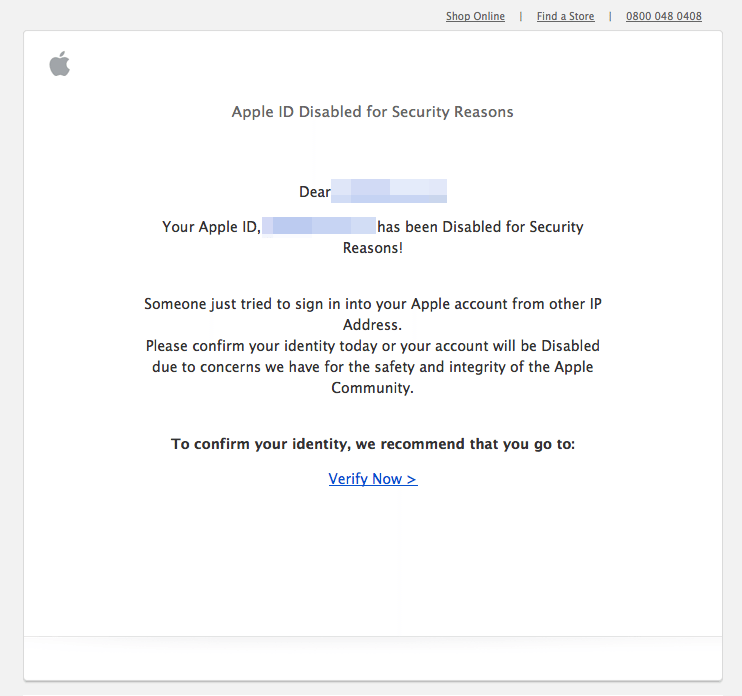
There’s a sketchy-sounding email you may have seen in your inbox. It appears to be an email from Apple and it tells you that your “Apple ID Disabled for Security Reasons.”
Don’t fall for this Apple scam email. It’s most likely a fake email — an Apple phishing scam designed to steal your Apple ID and password. We’ll show you what to look for if you get one of these and how you can protect yourself. Keep reading for more info. >>>
According to Wikipedia, “Phishing is the act of attempting to acquire information such as usernames, passwords, and credit card details (and sometimes, indirectly, money) by masquerading as a trustworthy entity in an electronic communication.”
This email looks like an official email from Apple — sort of. Although this one may mention you by name and inserts your email address, the word “disabled” is capitalized throughout the email — something that would never pass muster with even an entry-level proofreader. The text just doesn’t sound right and reads like one of those scammy Wells Fargo Bank phishing emails.
How to See If It’s Really a Scam
To see if it’s a scam email, hover your cursor over the link. If it’s a phishing email, you’ll find that it does not go to an Apple domain:
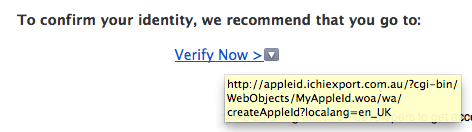
It actually takes you to an Apple-looking page on a non-Apple domain. In this case, we ended up at fortertuncurrygolf.com.au, an Australian domain that was not one of Apple’s although yours could end up in any dark corner of the web.
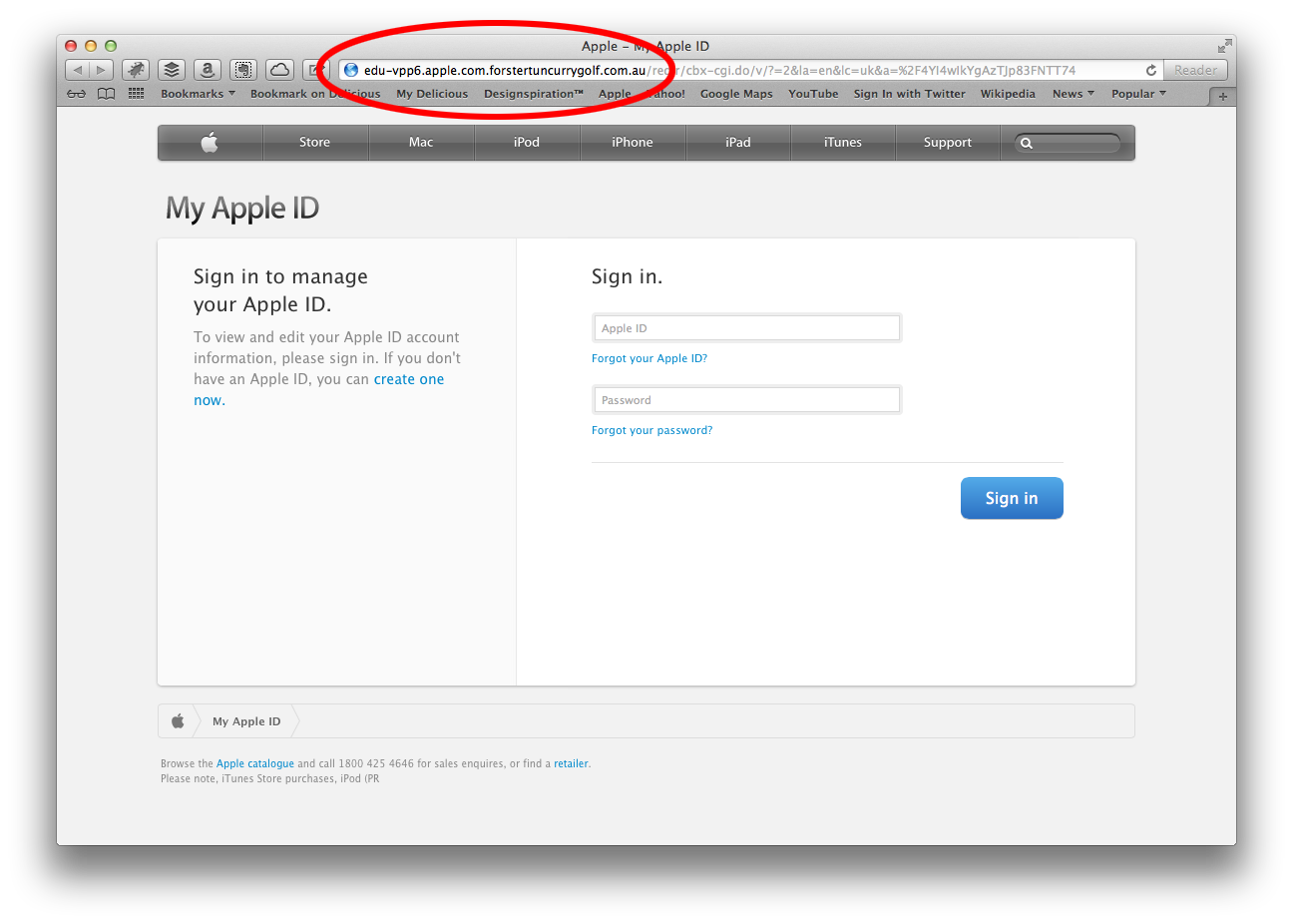
A genuine Apple domain will be simple, won’t have all the redirects, and will end in apple.com/ or icloud.com/.
Never click the links when you get an email like this. If you’re concerned that the email may be legitimate, go directly to the site in your browser, either with your own bookmarks or by manually typing the correct domain in the browser.
If you’ve clicked a suspect link and tried to sign in, chances are your Apple ID and password have been compromised. If you believe your account information has been compromised, visit My Apple ID to change your password immediately. You can manage your Apple ID from the following URL. Simply copy and paste. It’s a legitimate apple.com URL.
https://appleid.apple.com/cgi-bin/WebObjects/MyAppleId.woa/
Or, you can contact contact Apple Support for assistance.
Apparently, this is not new. Apple has a page on their support site dedicated to similar phishing attacks. You can read “Identifying fraudulent “phishing” email” on Apple.com here.
The bad guys not only want your money, they want your info as well. When out playing on the internet, be careful out there.
=M=
~~~~
Big thanks to Fotosyn’s James Moore for the heads up on this story and for supplying the images.

